


Joking Hazard
4.4835.00 Reviews
App Specs
- Version
- 1.7.6
- Updated On
- License
- Free
- Downloads
- 100,000+
- Developer
- Goliath Poland Sp z o.o.
- Categories
- Card
- Platform
- Android
Screenshots
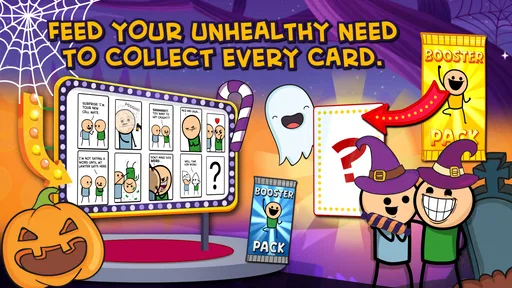
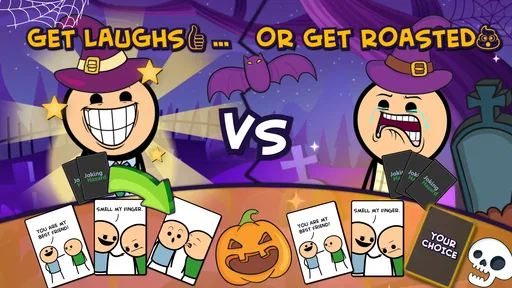
 Analysis by AppCompare
I went into Joking Hazard expecting a quick digital card game, but what stayed with me was its timing. The basic appeal is not simply choosing a funny card; it is deciding which card can turn an incomplete comic setup into the most ridiculous three-panel result. That small decision creates a surprisingly personal kind of comedy, because the best answer depends on the people watching, the mood of the group, and how willing everyone is to accept an awkward punchline.
This is the official online adaptation of Joking Hazard, presented as a free card game from Goliath Poland Sp z o.o. It is aimed at adults, with a Mature 17+ content rating, and that matters more here than it would in a typical casual card title. The humor can be crude, dark, or deliberately uncomfortable. I would not treat it as a family game just because the rules are easy to understand.
My overall impression is that the game works best as a social comedy tool rather than as a serious strategy experience. It gives a group a reason to react, argue for a punchline, and immediately try again after a weak result. That loop is its real strength. If you want a thoughtful solo card challenge or a carefully balanced competitive game, you may find it lightweight. If you want fast, irreverent entertainment with friends, it has a much clearer purpose.
How the first card choice sets everything in motion
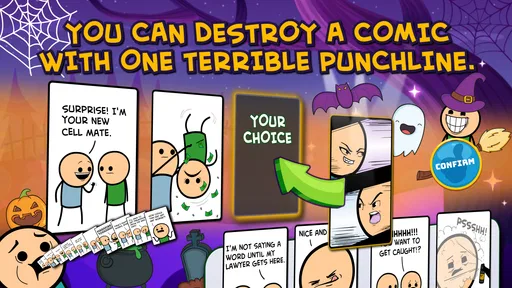
The first action is simple: I look at the comic situation already forming and choose a card that seems capable of completing it. The decision is quick, but it is not meaningless. A card that looks funny by itself may produce a flat ending, while a less obvious choice can create a much stronger escalation when placed beside the existing panels.
That is where the adaptation feels different from an ordinary digital card game. I am not mainly calculating points, building a deck, or searching for the most powerful effect. I am reading the room through the cards. I ask myself what the other players are likely to find funny, whether the joke needs a sharp ending, and whether an absurd answer is better than an obvious one.
The first move also establishes the tone for the whole session. With a relaxed group, players can choose deliberately strange combinations and enjoy the surprise. With people who do not know one another well, the same move can feel more cautious. I found that the game becomes better when everyone understands that a failed joke is not really a failure; it is an invitation to make the next round stranger.
One useful habit is to avoid playing the card that seems funniest in isolation. Instead, I look at the complete sequence and imagine how it will sound when read from beginning to end. This is a small but important distinction. The game rewards contextual humor, not just collecting cards with the most outrageous wording.
Worth Reading Before You Choose

EA SPORTS FC Mobile 26 Is a Bigger Football Game, but It Takes Time

Flipboard Shows What News Apps Must Do Beyond the Feed

Switching to Android Auto Means Rethinking Your Driving Routine

Google Calendar Makes a Crowded Week Easier to Manage

Ludo King Makes the Most of the Minutes Between Plans

Baby Panda World Brings Quick Play to Modern Phones, but Its Game Library Feels Busy
The visual comic structure helps the choice feel immediate. I can understand the setup without studying a complicated interface, and the short format keeps the action moving. That accessibility is valuable when the game is being passed around a group conversation rather than played in silence. Nobody needs a long explanation before taking part.
Why the decision feels social rather than strategic
The strongest choices are often audience-dependent. A card that earns a laugh from one group may receive silence from another, and that unpredictability gives the game its personality. I would not call this a weakness, but it does mean that the experience depends heavily on the people in the room. The app supplies the material; the players supply the comic judgment.
That also explains why the game is less satisfying for anyone seeking a fixed measure of skill. There is no universally correct punchline. You can make a clever choice and still lose because another combination matches the group’s mood more effectively. If you prefer games where careful planning reliably produces a better result, this format may feel arbitrary.
For a casual evening, though, that uncertainty is useful. It prevents one experienced player from dominating every round through memorized tactics. New players can contribute immediately because they do not need to learn a complex system before making a meaningful choice.
The feedback rhythm: reveal, reaction, and immediate judgment
After the card is played, the game’s feedback arrives through the completed comic and the reactions around it. That reveal is the central moment. I get to see whether the setup and ending actually work together, and the group responds almost instantly with laughter, groans, debate, or complete silence. Each reaction tells me something about the next choice without requiring a tutorial or a score breakdown.
This rhythm is more important than the individual cards. Action creates a comic; the comic creates a reaction; the reaction encourages another attempt. The pace feels conversational rather than mechanical. Even when a round does not land, the awkwardness can become part of the entertainment because someone usually explains why the combination failed or suggests an even worse interpretation.
I especially liked the way the reveal gives players a reason to defend their choices. A participant may explain that the final panel is funny because it changes the meaning of the first one, or because the entire sequence becomes unexpectedly bleak. Those explanations are not required by the rules, but they add another layer to the session and make the game feel less like silently selecting from a hand.
There is a trade-off here. The feedback is highly subjective, so the game cannot guarantee that every round will produce a satisfying punchline. A weak combination can interrupt the momentum, particularly when the group is tired or when the humor does not match everyone’s taste. I found that the best response is not to overanalyze the failed round. The game is designed around moving on quickly.
The short-form structure makes that possible. A disappointing result does not consume a large investment of time, and the next opportunity is close. That is a major advantage over longer party games where one poor turn can affect the entire evening. Here, the embarrassment usually disappears as soon as another comic begins to form.
How to keep the table from slowing down
One practical approach is to set a personal limit on deliberation. I try to make a choice after considering the full sequence once or twice instead of searching endlessly for a perfect punchline. Overthinking can drain the humor because the group starts waiting for a decision rather than reacting to the result.
It also helps to accept different kinds of funny. Not every successful round needs a clever twist. Sometimes the best outcome is a straightforward escalation; sometimes it is a bizarre mismatch that makes no logical sense. Treating every comic as if it must be polished comedy makes the experience more demanding than it needs to be.
For groups with different comfort levels, I would establish boundaries before starting. The Mature 17+ rating is a useful warning, but it cannot predict what any particular group will consider too personal or unpleasant. A quick agreement about topics people want to avoid can protect the mood without turning the game into a formal rules discussion.
What counts as a reward when the prize is a laugh?
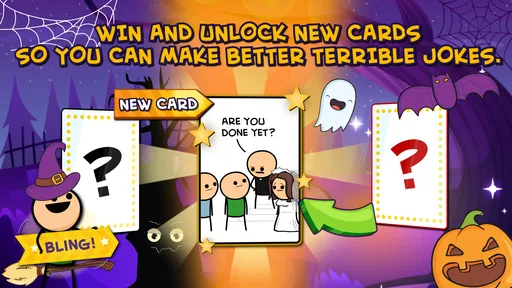
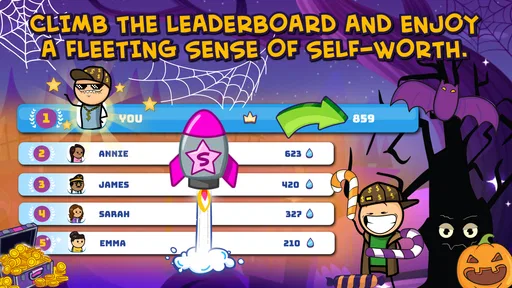
The reward in Joking Hazard is partly competitive and partly social. Winning a round can feel good, but the larger payoff is making a combination that everyone remembers. I have found that a player may lose the formal contest and still become the person whose outrageous card choice gets quoted later. That kind of memorable moment is more valuable than a conventional progression system for this type of game.
The game also rewards reading the group. I pay attention to whether people respond more strongly to surprise, absurdity, dark humor, or a clean escalation. Over several rounds, those reactions become informal information. I can adjust my choices without needing a complicated strategy guide, and the group’s shared sense of humor gradually becomes part of the game.
That creates an interesting balance between deliberate play and spontaneity. I can try to tailor a card to the audience, but I should not make the decision so calculated that the joke feels manufactured. The most satisfying rewards usually come from a choice that has some intention behind it but still leaves room for an unexpected interpretation.
For a small gathering, the reward is easy to understand: it fills quiet moments and gives everyone something to comment on. In a larger social setting, its usefulness depends on whether everyone can follow the current comic and get a chance to participate. If people are frequently distracted or talking over one another, the reveal may lose its impact.
This is also where the game compares favorably with ordinary card alternatives. Traditional card games tend to reward hand management, probability, bluffing, or long-term planning. Joking Hazard instead rewards timing and shared taste. It is closer to a collaborative comedy prompt wrapped in a competitive card format than to a conventional strategy title.
That comparison should guide expectations. Someone looking for a replacement for a deep collectible card game will probably be disappointed. There is no reason to approach it as a system that must be mastered over many hours. Its value comes from how quickly it can generate a social moment, not from how much complexity it can sustain.
When the reward is not worth the friction
The humor will not suit everyone, and the Mature 17+ label should be taken seriously. I would skip it for children, mixed-age family gatherings, or groups that prefer gentle, universally safe jokes. Even adults may find some combinations uncomfortable rather than funny, so the game is a poor choice when the group has very different boundaries and no interest in discussing them.
I would also choose another card game for a quiet evening with one other person if the goal is strategic depth. The social reaction is a major part of the payoff, and without that energy the card combinations can feel less meaningful. It can still be amusing, but it does not replace a focused two-player game built around planning and tactical decisions.
The session reset: why a weak round rarely ends the night
The reset is one of the game’s most effective features in practice. Once a comic has been judged, the emotional weight of that result is low. A brilliant punchline gets celebrated, a terrible one gets mocked, and then the group is ready to see what comes next. That clean restart is the reason another session begins so easily.
I noticed that the game works particularly well in short gaps: before dinner, during a casual visit, or when a larger activity needs a change of pace. Players can join the flow without preparing a character, learning a long rulebook, or remembering a detailed campaign state. The low commitment makes it easy to suggest one more round.
At the same time, the reset can expose the limits of the format. If a group has already seen many familiar patterns or if the players are not reacting strongly, another round may feel like repeating the same action without enough variation. The solution is not to force a long session. I would rather stop while the group is still laughing and return later than continue until every card feels routine.
A useful everyday scenario is a small group of friends waiting for food at home. One person starts the game, everyone makes a few choices, and the conversation naturally expands around the results. When dinner is ready, the session can stop without anyone feeling that an unfinished campaign has been abandoned. That flexibility is a genuine strength for a casual mobile game.
The reset also makes it forgiving for newcomers. A first-time player can watch one round, make a choice in the next, and understand the flow through direct feedback. There is no large penalty for an early mistake, because the next comic is already a fresh opportunity.
Still, I would not assume that easy rules guarantee universal accessibility. The content itself may be the barrier, and the humor often depends on cultural references, personal taste, and willingness to engage with deliberately provocative material. The interface may be simple, but the social context is not always simple.
Free access and the practical question of spending
The game is free to download, which makes it easy to try with a group before deciding whether it belongs in your regular rotation. It includes in-app purchases ranging from $1.99 to $48.99 per item. I would approach those purchases carefully and decide whether the current experience already gives the group enough variety before spending.
For me, the important question is not whether optional content exists, but whether it improves the specific kind of session I want. If a group plays occasionally, free access may be sufficient. If the same friends return often and want more material, additional purchases could become more relevant, but I would judge that against how quickly the group tires of familiar comic patterns.
This is one area where the game differs from a physical party box. A physical set can sit on a shelf and be reused without a phone or tablet in the middle of the conversation. The digital version is more convenient to start and easier to carry, but it also places the experience inside an app ecosystem where optional spending can influence how much content a regular group wants.
Performance, audience, and what I would check before installing
The current version is 1.7.6, and the game supports devices running Android 6.0 or later. That broad compatibility makes it approachable for people who are not using a recent phone, although the actual comfort of a group session still depends on screen size, battery condition, and whether everyone can clearly see the comic.
Because this is a social game, I would test the setup before inviting a large group. Make sure the intended players understand how turns are handled and decide who will hold or display the device if the session is not taking place on separate screens. Small practical details like visibility and turn order can affect the comedy more than the card rules themselves.
The game has an average rating of 4.4 from around 5.8 thousand ratings, with over 800 written reviews and more than 100 thousand installs. Those figures suggest that it has found a real audience, but they should not replace personal judgment about the humor. A well-liked party game can still be completely wrong for a particular group.
The developer is Goliath Poland Sp z o.o., and the release arrived on March 28, 2025. I mention that context because this is a relatively recent digital adaptation rather than an old mobile card title that has gradually accumulated unrelated features. Its identity remains focused on the comic-card experience, which is exactly what makes it appealing and also what limits its range.
The Mature 17+ rating is the most important audience filter. I would recommend it to adults who enjoy edgy group humor and do not mind that some rounds may be more awkward than clever. I would skip it for anyone wanting wholesome family entertainment, a solo pastime, or a card game where every outcome feels carefully balanced.
My verdict on the action-feedback-reward-reset loop
The loop is clear and effective: choose a card, reveal the finished comic, react to the result, enjoy the laugh or the failure, and immediately begin another round. The action is accessible, the feedback is social, the reward is a memorable punchline, and the reset keeps a bad result from becoming a serious setback.
That loop is also the honest measure of the game. It is not trying to replace a deep strategy card title, and I would not recommend it on that basis. Its best use is as a fast, adult party game that turns a phone into a source of prompts for conversation. The group’s chemistry matters more than technical mastery.
My practical advice is to start with a small, compatible group, agree on boundaries, and resist the urge to stretch a session past its natural energy. Give each comic enough attention to land, but do not demand perfection from every choice. The funniest moments often come from an answer that looked questionable until the complete sequence appeared.
After spending time with it, I see the strongest reason to return: the next round is not merely another attempt to improve a score. It is another chance for the group to discover an unexpected combination and react together. If your ideal card game is measured in laughter, quick resets, and stories people repeat afterward, this adaptation is worth trying. If your ideal game is measured in strategic depth, predictable balance, or family-friendly content, I would choose a different option instead.
Pros
- Easy-to-learn rules make it suitable for casual game nights.
- Dark humor and unexpected punchlines keep rounds unpredictable.
- Works well with small groups as well as larger gatherings.
- Physical cards encourage face-to-face interaction without screens.
- Replay value comes from constantly changing comic combinations.
Cons
- Humor can be offensive or inappropriate for younger players.
- Requires at least three players for the best experience.
- Some rounds depend heavily on players’ personal sense of humor.
- Card quality may wear down with frequent handling.
- Replayability can drop if the same cards appear too often.
FAQs for Joking Hazard
What is Joking Hazard, and how is the game played?
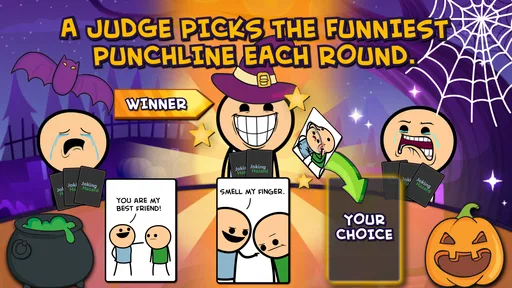
Joking Hazard is a party card game based on creating funny, awkward, or often inappropriate three-panel comics. Players use cards featuring characters and scenes inspired by webcomic-style humor to complete a comic strip. A judge selects the funniest or most entertaining combination each round, and the player whose submission is chosen earns the point. The game is designed for group play and relies heavily on creativity and personal taste.
How many people can play Joking Hazard?
Joking Hazard is generally intended for groups of three to ten players, making it more suitable for parties and gatherings than for solo or traditional two-player gaming. The experience becomes more entertaining when players know each other and feel comfortable with the game’s mature humor. Before playing, it is worth checking the recommended age range, since many cards contain adult themes, suggestive jokes, violence, or offensive language.
Is Joking Hazard appropriate for children?
Joking Hazard is not typically considered a children’s game. Its humor can include sexual references, dark comedy, profanity, violence, and deliberately uncomfortable situations. The exact experience depends on the cards drawn and the imagination of the players, but parents should review the game’s age recommendation before allowing younger players to participate. It is best suited to adults or mature groups who understand its intentionally edgy style.
Does Joking Hazard require an internet connection or in-app purchases?
If you are referring to the official physical card game, Joking Hazard does not require an internet connection, an account, or recurring in-app purchases. You simply need the card set and enough players to begin. Digital versions or companion applications may have different requirements, including advertisements, optional purchases, permissions, or online features. Always check the specific Android or iOS store listing to confirm what is included before downloading.
Is Joking Hazard worth downloading or buying?
Joking Hazard can be worthwhile if you enjoy irreverent party games, comic-style storytelling, and humor that is intentionally strange or offensive. It works particularly well during casual gatherings because the rules are easy to learn and rounds can be completed quickly. However, it may not suit players who prefer strategic gameplay, family-friendly content, or carefully structured jokes. Its value depends mainly on your group’s sense of humor and willingness to improvise.


